


 Posts


Showing posts with label nonfiction. Show all posts
Showing posts with label nonfiction. Show all posts
Tuesday, December 7, 2010
Fragments of Marilyn Monroe


Monday, November 29, 2010
A Motley life...
 I haven't yet read the acclaimed autobiography Life by Keith Richards, but am interested in doing so. Instead this weekend I quickly breezed through the years of hard rock, partying, and drama that is Vince Neil's life. His story, written with the assistance of Mike Sager (I personally think he must have done more than assist), is titled Tattoos & Tequila. The lengthy subtitle sums up almost everything between the covers, 'To hell and back with one of rock's most notorious frontmen'. As with other celebrity biographies that speak of addictions, the events described by Neil are at times comical and stupid and at other times, just plain sad. Sad in the way that no one's life should be so controlled by substance abuse that quality of life becomes non-existent and so little care or responsibility is taken for one's actions. I've previously read The Dirt, Neil Strauss' biography of Motley Crue, and although the unruly behavioral episodes described are of the same ilk, the stories in The Dirt were far more enjoyable. But then I suppose it was difficult for Neil to recall with specificity the many blackout periods during his years of fame. Of interest to any Motley Crue fans who remember when their music was good (and you have to be over 30 to remember that).
 |
| Tattoos & Tequila book jacket |
 I haven't yet read the acclaimed autobiography Life by Keith Richards, but am interested in doing so. Instead this weekend I quickly breezed through the years of hard rock, partying, and drama that is Vince Neil's life. His story, written with the assistance of Mike Sager (I personally think he must have done more than assist), is titled Tattoos & Tequila. The lengthy subtitle sums up almost everything between the covers, 'To hell and back with one of rock's most notorious frontmen'. As with other celebrity biographies that speak of addictions, the events described by Neil are at times comical and stupid and at other times, just plain sad. Sad in the way that no one's life should be so controlled by substance abuse that quality of life becomes non-existent and so little care or responsibility is taken for one's actions. I've previously read The Dirt, Neil Strauss' biography of Motley Crue, and although the unruly behavioral episodes described are of the same ilk, the stories in The Dirt were far more enjoyable. But then I suppose it was difficult for Neil to recall with specificity the many blackout periods during his years of fame. Of interest to any Motley Crue fans who remember when their music was good (and you have to be over 30 to remember that).
Saturday, November 27, 2010
Modern Ruins

Tuesday, November 23, 2010
Why not say what happened?
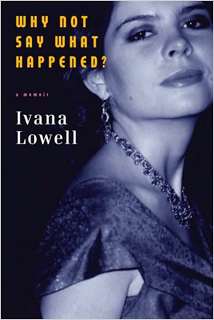
If this sounds like something you'd like to read, you might also like:
Dead End Gene Pool by Wendy Burden
Fierce by Kelly Osbourne
Uncharted Territori by Tori Spelling
Thursday, November 11, 2010
What is a sacrifice zone?

Monday, November 8, 2010
How much?

Wednesday, October 20, 2010
From the Ashes

Tuesday, October 19, 2010
Sanitarium childhood

A few important points to take from this work:
*Tuberculosis is not only a disease of the past.
*Tuberculosis is treatable with a lengthy course of antibiotics.
*According to CDC statistics, there were over 12,000 cases of TB in the US.
Centers for Disease Control information on Tuberculosis
Tuesday, August 10, 2010
The meth problem in small-town America


I highly recommend both works (along with Burning Bright by Ron Rash) for a comprehensive introduction to this current topic.
Monday, July 19, 2010
Inside Gitmo
President Obama has spoken since his inaguaration about closing the controversial detention facility in Guantanamo Bay, Cuba . Although it has been in the news lately, closing of Gitmo does not seem imminent by the end of the year even though the Supermax facility in Thompson, Illinois seems to be moving forward on planned changes being made to hold prisoners from Gitmo. Several library resources can shed light on this facility:
The Thomson Correctional Center in Thomson, Ill. is being considered as "a leading option" to house suspected terrorists currently held at Guantanamo Bay. See photos from the chicagotribune.com below:


- Inside Gitmo [DVD] – The prison on the Naval base at Guantanamo Bay, Cuba has received media attention for its practices, especially since 9/11. This National Geographic documentary shows the lives of guards, prisoners, and civilian visitors to the prison.
- Poems from Guantanamo: the detainees speak
- Enemy combatant: my imprisonment at Guantánamo, Bagram, and Kandahar by Moazzam Begg
The Thomson Correctional Center in Thomson, Ill. is being considered as "a leading option" to house suspected terrorists currently held at Guantanamo Bay. See photos from the chicagotribune.com below:


Friday, July 2, 2010
Oppression and Possessions

Princess : a true story of life behind the veil in Saudi Arabia
Growing up Bin Laden : Osama's wife and son take us inside their secret world (with Najwa bin Laden & Omar bin Laden)
Snoop – Sam Gosling, PhD

I would suggest these two Gladwell books instead:
Outliers : the story of success
The tipping point : how little things can make a big difference
Tuesday, June 22, 2010
Take the non-fiction challenge
Everyone is now flocking to the library to pick up summer reading. Try to have a few alternate choices in mind in case the book you wanted is checked out. You can always get on the hold list, but how about trying a non-fiction book that is every bit as entertaining, action-packed, and suspenseful as fiction? You might also pick up some trivia which could come in useful if you like crosswords or practicing for Jeopardy! (like I do). I’m going to suggest one page-turner in each main Dewey category (plus biography). Take the non-fiction challenge: Read something on the list and give me your feedback here.
 Collective biography (B9) – The dirt by Motley Crue
100’s - My secret: A PostSecret book
200’s – Don’t know much about mythology, another Kenneth Davis book packed with trivia.
 300’s – Curtains: Adventures of an undertaker-in-training (Kim gave this one a thumbs-up)
400’s – Woe Is I: The Grammarphobe's guide to better English in plain English
500’s – Wicked plants: the weed that killed Lincoln's mother and other botanical atrocities
600’s – The hot zone – Ebola, monkeys, and biological weapons will put you on the edge of your seat.
700’s – The art of Ancient Egypt by Gay Robins
800’s – Undateable : 311 things guys do that guarantee they won't be dating or having sex – This is just too funny; both the text and the pictures merit laughs. Check this promotional clip.
900’s – Paris Under Water: How the City of Light Survived the Great Flood of 1910
I'll be looking forward to your comments.
 Collective biography (B9) – The dirt by Motley Crue
Biography (B) – High on arrival by Mackenzie Phillips
200’s – Don’t know much about mythology, another Kenneth Davis book packed with trivia.

400’s – Woe Is I: The Grammarphobe's guide to better English in plain English
500’s – Wicked plants: the weed that killed Lincoln's mother and other botanical atrocities
600’s – The hot zone – Ebola, monkeys, and biological weapons will put you on the edge of your seat.
700’s – The art of Ancient Egypt by Gay Robins
800’s – Undateable : 311 things guys do that guarantee they won't be dating or having sex – This is just too funny; both the text and the pictures merit laughs. Check this promotional clip.
900’s – Paris Under Water: How the City of Light Survived the Great Flood of 1910
I'll be looking forward to your comments.
Monday, June 21, 2010
Magill's Literary Annual 2010 - new in reference

Magill's Literary Annual is published by Salem Press
Friday, June 18, 2010
The end is near?
You have the amount of time shown above to read up! Here are some pre-apocalypse materials at PCL:
The real history of the end of the world: Apocalyptic predictions from Revelation and Nostradamus to Y2K and 2012 - I really wanted to like this book (I really, really did!), but try as I may it was like wading through wet sand. This is a very comprehensive work starting with beliefs at the beginning of recorded time. It is also diligently and painstakingly researched with copious footnotes (which I enjoy – I’m one of those geeks who reads the footnotes) and Newman obviously has a deep understanding and passion for the subject. You might consider reading a few chapters that may hold a special interest, but I found it dry (in spite of humor peppered throughout). My favorite chapters were on the Shakers, the Branch Davidians, and Y2K.
For some more insight on end of the world, read Nostradamus's own words… The complete prophecies of Nostradamus ... and Nostradamus: The millennium and beyond
A history of the end of the world: How the most controversial book in the Bible changed the course of Western civilization-referring to the book of Revelation
There have been quite a few checkouts on the recently added The complete idiot's guide to 2012. Want to put a hold on this item?
And finally, there is the Hollywood version. The movie 2012 portrayed an idea of the end including earthquakes, meteors, giant arks, and a bit of fluff that really outsmarted her arrogant Russian sugardaddy. I really enjoyed this (Adam thinks I'm nuts), although not in an it can happen sort of way. There is a much greater chance of Will Smith & his dog being totally alone in Manhattan.
Just remember to return all your library materials before the countdown clock runs out!
Friday, June 11, 2010
Tales of shopping...free at the library

Spent: Memoirs of a shopping addict, released in May by author Avis Cardella, took a look at this increasing prominent disorder which has driven compulsive shoppers even beyond bankruptcy. The NYT book review this past Sunday didn’t really have a positive or negative spin on Spent. I believe compulsive shopping is a form of addiction. I think everyone feels like buying something new every now and again. The ones who purchase the designer goods for hundreds or thousands of dollars are the ones labeled shopping addicts; the rest of us are just poor budgeters. Cardella explains the root of her addiction is that she believed people would judge her by her clothing and not for her personality. It sounds like a self-confidence and peer pressure issue to me. Even though I haven’t bought (and will not be buying) the $740 skirt and won’t have a huge credit card bill I can’t pay, it is sad that some adults still have a problem with peer pressure. You would have thought we would have outgrown it by now.
A more frightening book on overspending is Save Karyn: one shopaholic's journey to debt and back. This one is a bit older (2003) and I came across it while dusting and straightening in the stacks. Relaying her own experience, the author, Karyn Bosnak, relates how every moment of her day was consumed by the need to purchase things and services, and the struggle to pay for them and keep up appearances. This book was more frightening because Bosnak made a good salary and simply continually overspent. Her situation gets so dire that she moves, sells items she has acquired, and actually begs the general public (in a unique way) to help her out of her self-created mess. I preferred this book (over Spent) for its attention to details – this woman can tell a shopping story so descriptively you can feel the lush fabrics and smell leather, and the meticulous tally of funds she kept both in her head and on paper just trying to keep her bank balances positive is astounding. Bosnak’s issue seems more like an addiction, although I (with no $740 skirt) can’t drum up very much sympathy for either of their situations.
Reader comments are welcome.
Monday, June 7, 2010
Explicit & Exotic

See what Elle has to say about Whip Smart
Some girls: My life in a harem – Jillian Lauren had an alter ego which she would slip into (or out of, as the case may be) when she arrived at the royal palace in Brunei. Paid to live on the estate of one of the richest sultanates for months at a time, Lauren would check her own emotions and desires as she became one of a herd of foreign women handsomely compensated to be at the beck and call of the Sultan’s brother, Prince Jefri. Lauren’s exhausting jet-setting travel to exotic locales with her Louis Vuitton luggage would rival the itinerary of Lara Croft. In an atmosphere of privileged boredom, catty female behaviors reminiscent of New York Housewives Bethenny and Kelly, is the daily forecast for Brunei. Jealousy in the harem abounds over jewelry, designer clothes, and the favor of the prince. In learning the best way to please the prince, Lauren learns important lessons about herself, her attitudes about love, and her values. Like Pretty Woman is to Cinderella, a movie of this tale would be the modern version of The King of Siam.
Put Some girls: My life in a harem on hold
Friday, May 28, 2010

The 2010 Ken Book Award winner is the moving photo-essay volume Asylum: Inside the closed worlds of state mental hospitals, which is available in the recent non-fiction section.
This oversized work captures snapshots of state mental institutions truly frozen in time. As facilities which were build to be cutting edge at the beginning of the 20th century declined and the scope of mental health care evolved, the massive state medical compounds began to close. The structures and the memories of those who lived or worked within them remained. Christopher Payne captures these images of painful history and tormented memory. The images are surreal, eerie, and bleak: massive, brick-strong structures as homes to some of the most frail inmates; the overwhelming size of the crumbling facilities juxtaposed with the absence of any human life. The accompanying text passage by Oliver Sacks gives a brief, though comprehensive, statement on mental health treatment, facilities, and concepts influencing the state funded institutions, but it is the photographs that communicate issues of humanity in care and the revolution that ended this form of care for the mentally ill.
Check out the Asylum book website.
The Ken Book Award is given by the National Alliance on Mental Illness of NYC-Metro, to book raising awareness of mental illness. Past winners have included Jane Pauley, Gary Trudeau, and Wally Lamb.
Thursday, May 27, 2010
What I’ve read lately…
by Gina, Head Reference Librarian
Dead end gene pool: a memoir This week I breezed quickly through a new biography which was shocking, blatantly descriptive, and offered a glimpse into a lifestyle which only few have access. Dead end gene pool is the reminisces of Wendy Burden, a Vanderbilt heir. Burden relates incidents occurring within her ultra-rich, blueblood family such as her brother and her as children “robbing” the family’s “cottage” of all kitchen edibles and placing them on the roof, her mother’s sunbathing techniques, and laughable tales of weird and woeful relations. Told in a factual manner, Burden sometimes has to educate the reader as to why she (as a child) believed the described events were normal. As Burden approaches adolescence and her teenage years, she develops her own way of coping with the pressures and expectations of the family name. I found this humorous, sad, and enlightening and appreciate the candid snapshot of an American aristocratic family. The author's speaks about her work in this short video clip: http://www.amazon.com/gp/mpd/permalink/m1B2A107GE556T
 An older title I recently enjoyed was Kenneth Davis’ Don’t know much about anything. Examined in one page entries were facts about a person, location, event, along with a few trivia questions. This is great reading for crossword aficionados (I’ve already used some tidbits learned to fill in squares) or Jeopardy! contestants in training. The only complaint I have with the format is having to turn the page for the answers to post-entry quizzes multiple times while self-testing myself. I would definitely peruse other titles in this series. Visit Kenneth Davis' webpage http://www.dontknowmuch.com/
PCL owns the following in adult non-fiction:
*Don't know much about anything / Kenneth C. Davis.
*Don't know much about geography: everything you need to know about the world but never learned / Kenneth C. Davis.
*Don't know much about mythology: everything you need to know about the greatest stories in human history but never learned / Kenneth C. Davis.
*Don't know much about the Bible: everything you need to know about the "Good Book" but never learned / by Kenneth C. Davis.
*Don't know much about the Civil War: everything you need to know about America's greatest conflict but never learned / Kenneth C. Davis.
*History: everything you need to know about American history but never learned / by Kenneth C. Davis.
Davis has also authored juvenile titles in the same style.
Friday, May 21, 2010
Edgar Award for Best Fact Crime Work

Earlier this month, the Edgar Awards were named by the American Mystery Writers of America. In the best fact crime category - Columbine by Dave Cullen was the winner. This relates the events of the 1999 shooting at Columbine High outside of Denver. This book answers many questions remaining about ‘why’ and ‘how,’ even after all the publicity this tragedy received. The documentation style alternating among the months of pre-planning the attack, to the day of, to the days following is tedious at times, but journalist Cullen brings the many players and points of view cohesively together to provide a well researched and well cited document by the conclusion of the account. Riveting, revealing, and disturbing. Highly recommended for an in depth look at the teenagers involved, areas where higher authority may have been remiss, and the lasting effects for our national education system.
Other nominees:
Vanished Smile: The Mysterious Theft of Mona Lisa by R.A. Scotti (Random House - Alfred A. Knopf)
For those who may not know, the Mona Lisa was indeed stolen from the Louvre in 1911, was not noticed missing for 24 hours, and was gone for 2 years before being found in Florence. Motives for the disappearance of La Joconde, the most recognized painted woman are unknown. Still a mystery, the case of the missing DaVinci involved noted painters, French authorities, Louvre security, and a cast of colorful characters. R.A. Scotti makes both Mona Lisa and the facts of her disappearance come alive in this tale of historic art theft. An enjoyable education in art history.
Also recommended by R.A. Scotti – Sudden Sea, the great hurricane of 1938. This perfect storm brewed in the Atlantic bore down on the Northeast coast with short notice and affected thousands of residents. Personal stories and historical detail show a well researched documentary.
Another nominated title in the PCL collection is:
Provenance: How a Con Man and a Forger Rewrote the History of Modern Art by Laney Salisbury and Aly Sujo (The Penguin Press) – I have yet to read this work recommended by Publisher’s Weekly and the Washington Post, but would welcome reader comments.
Reviews by Gina, Head Reference Librarian and avid true crime reader
Friday, January 29, 2010
Larger than Life Nonfiction
Oversize non fiction books can now be found standing tall atop the reference materials shelving. Check out the selection as these treasures were easy to miss previously. Titles include:
The best of LIFE
The Lonely Planet travel book: A journey through every country in the world.
Horses of the World: From the desert to the racetrack.
Reef
Amazonia: The land, the wildlife, the river, the people.
The Appalachian Trail: Calling me back to the hills, text and poetry by Earl Shaffer; photography by Bart Smith.
Subscribe to:
Posts (Atom)

